
A Debrief on Palmetto
Thanks for checking in after what has been an incredible and exhausting week of athletic development.
On Monday, April 6 I woke up at 3:30 in the morning with the goal of running from Walhalla, SC, just down the road from my house, to Charleston, SC, 500 miles along a cobbled strip of asphalt and dirt known as the Palmetto Trail. The goal was this: 50-60 miles a day, 12-15 hours each day to get that done.
The TL;DR: I covered 215 of those miles before deciding I was maybe playing it a little too fast and loose with my heart health, but that will come in a bit.
A Strong Start
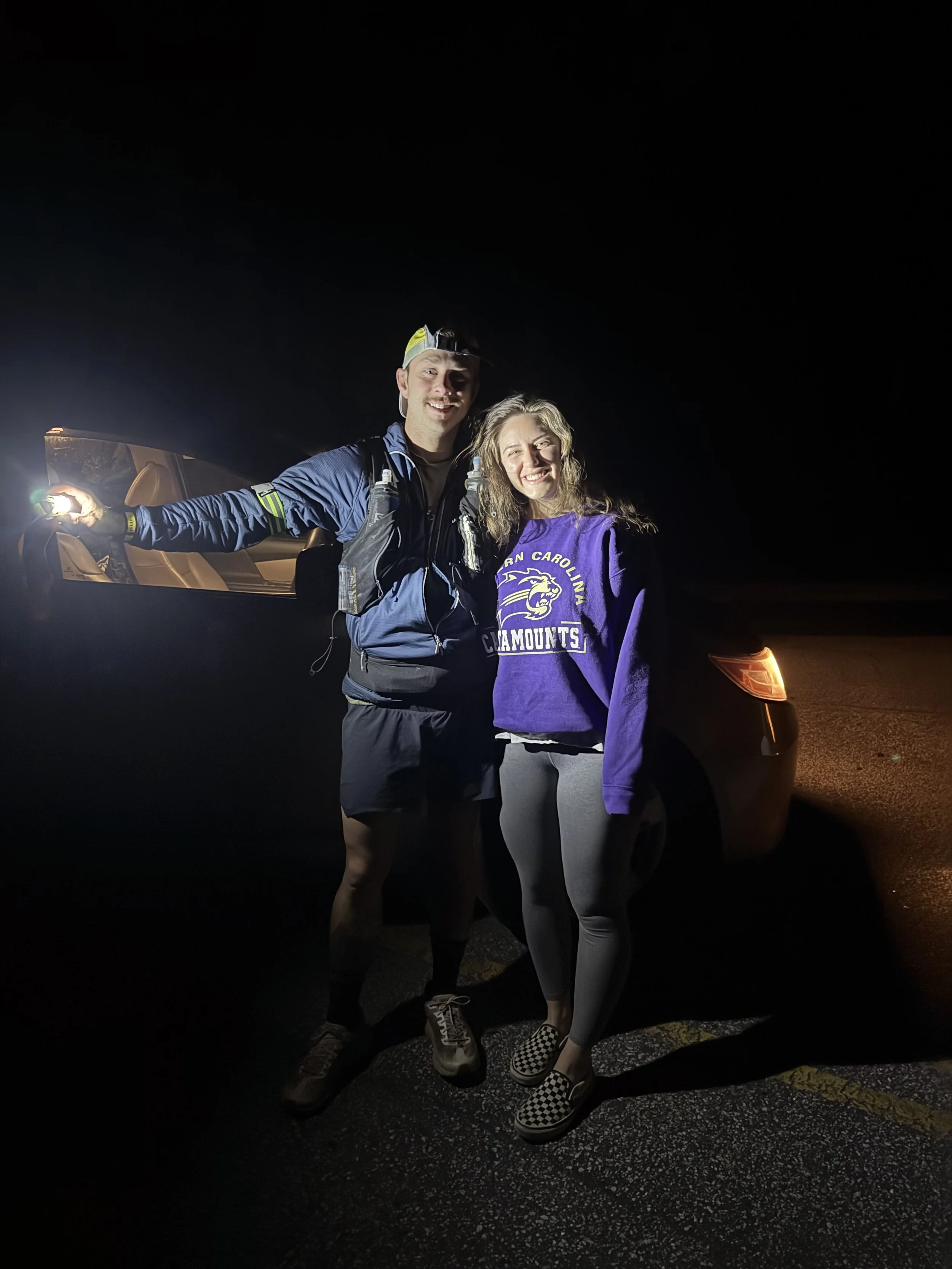
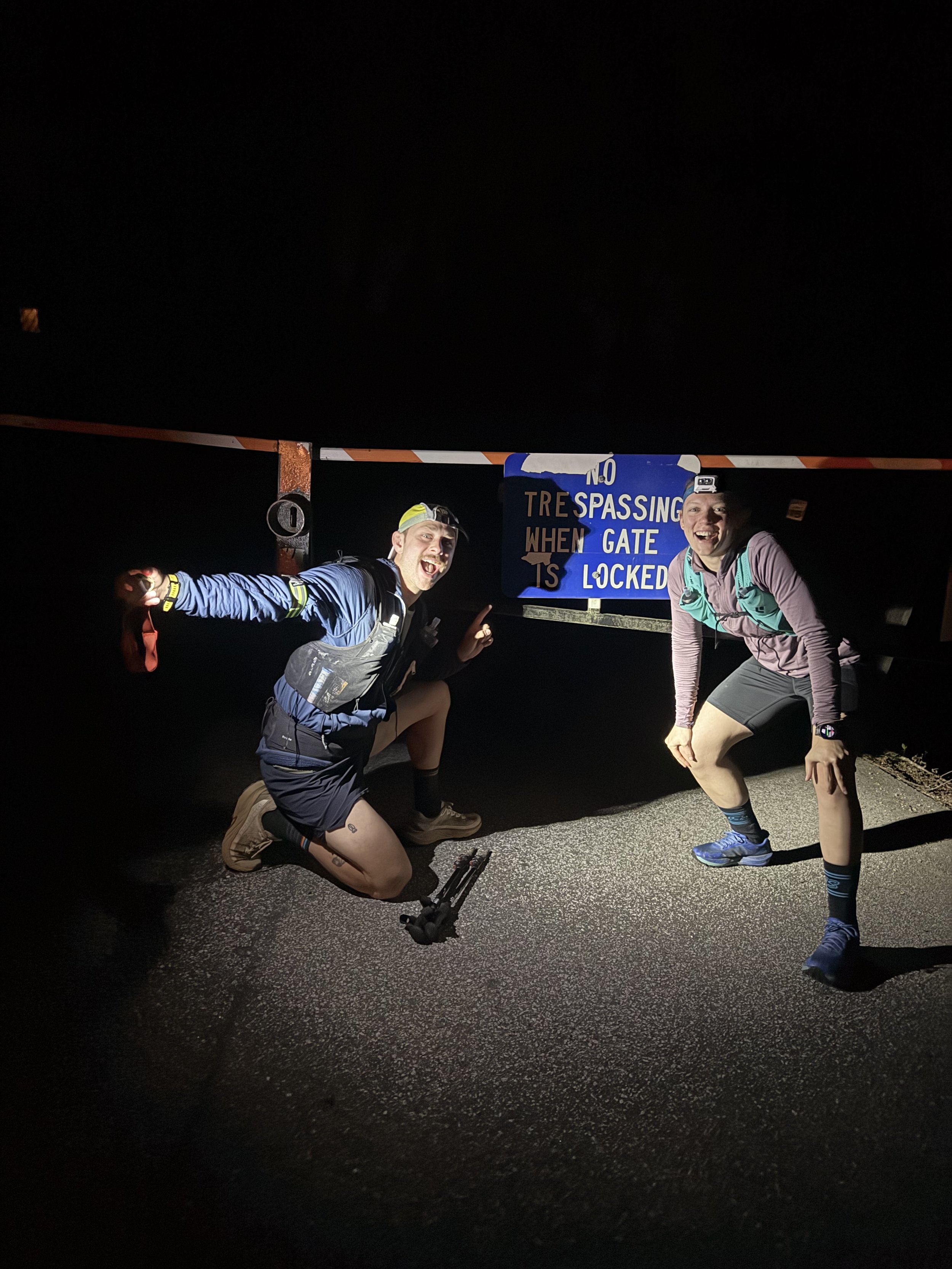
By 5:45 AM I was scooting along the Stumphouse Trails with my friend, Kara. We barreled through the first eleven or so miles of rolling mountain bike track in a little over two hours, noting the often understated beauty of the Blue Ridge Escarpment along the way. A sprawling network of USFS roads made little gravel arteries that shunted us between scenic singletrack amply equipped with waterfalls and cliffside vistas. We combed through a recent burn that was already beginning to resurge with vibrant green clover before popping out to her car on the highway and departing from my only pacer of the project.
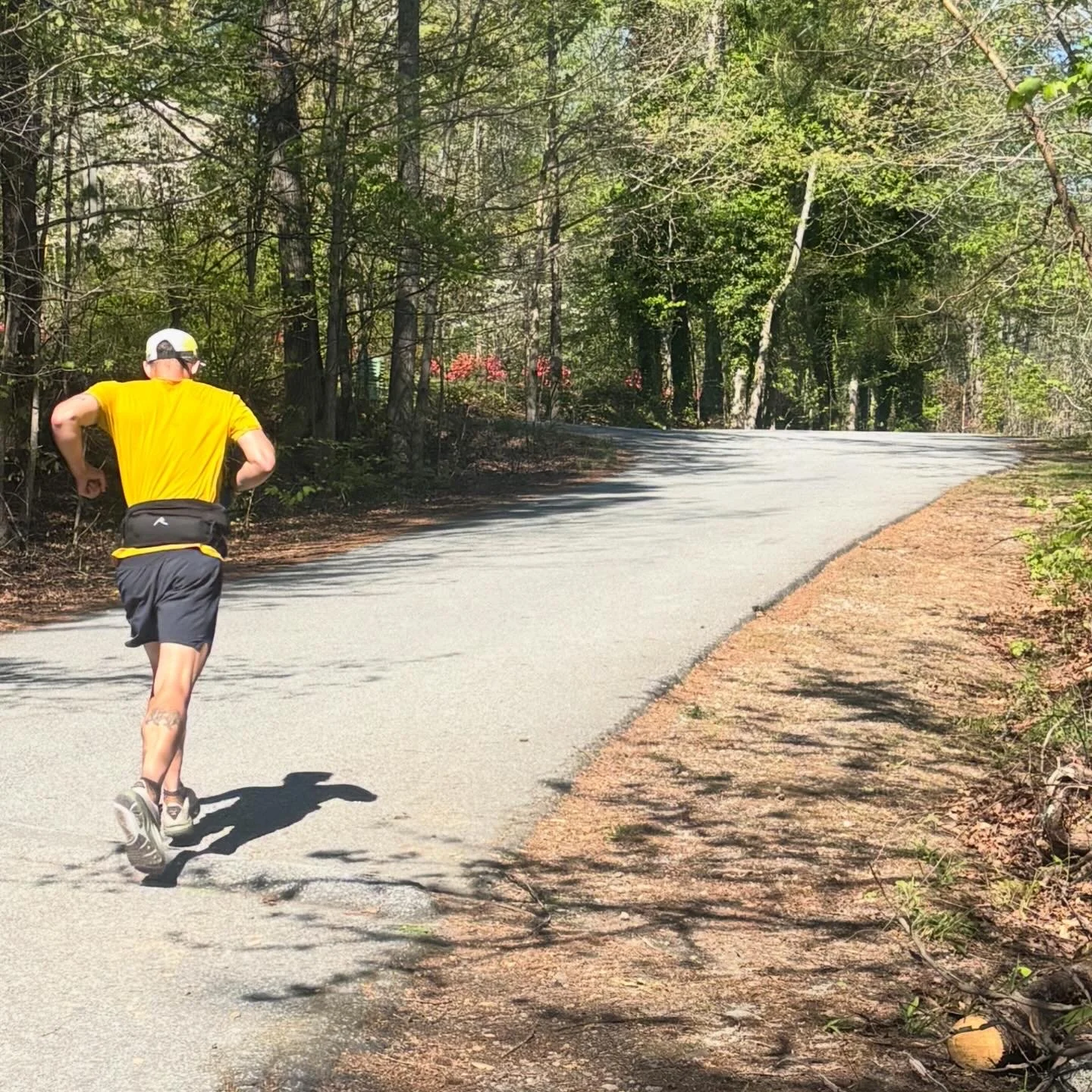
Most of day one went as expected. I ran between ten and twelve-minute miles on the highways, and then maintained no slower than a twenty-minute mile on the technical trail sections.
By mid afternoon I had put up nearly a third of the total climbing across this project. It was a brutal and incredibly steep start to the journey. The summit of Sassafras Mountain, South Carolina’s highest point, came with the information that the crate of camping supplies and food my sister had left for me near Caesar’s Head State Park was at risk of being confiscated by the rangers who were very unhappy at the thought of me primitive camping near the parking lot. With my only warm layers, charging cables, real food, and camping supplies waiting in that tote, I pressed on through sunset uncertain about whether or not I would need to continue moving until dawn when I could charge my then-dead phone at a gas station and feed my starved body. The sign at Sassafrass read 14 miles to my endpoint, but by my watch it was over 17, and that meant pressing on until nearly 11:00PM. I was exhausted, but I did have my tub, and I could sleep well knowing my first day concluded at 62 miles and 10,000 feet of climbing.
Rhythm
“Fast” is such a relative term in ultra efforts. I had 12-15 hours each day to produce over two marathons of distance, and I could, in theory, get that done in under 11 hours, but that kind of output would cause too much strain on my legs, so I could only move as fast as what felt like “light work,” or, for me, about 11-12 minute miles in the flats and 15-18 minute miles in the climbs. This is my forever pace, something we also have in the world of thru-hiking, meaning what I could hold in perpetuity as long as I am fed and in unobstructed terrain. Fast in a 500 mile effort is measured in continued, steady progress over time, and by the end of day three we were seeing that play out in my growing lead ahead of the current record holder’s day-end stops. Eat enough, reduce breaktimes, recover well enough during the night, and, importantly, fight like hell each day, and over time these things should bloom into an effort being proud of.
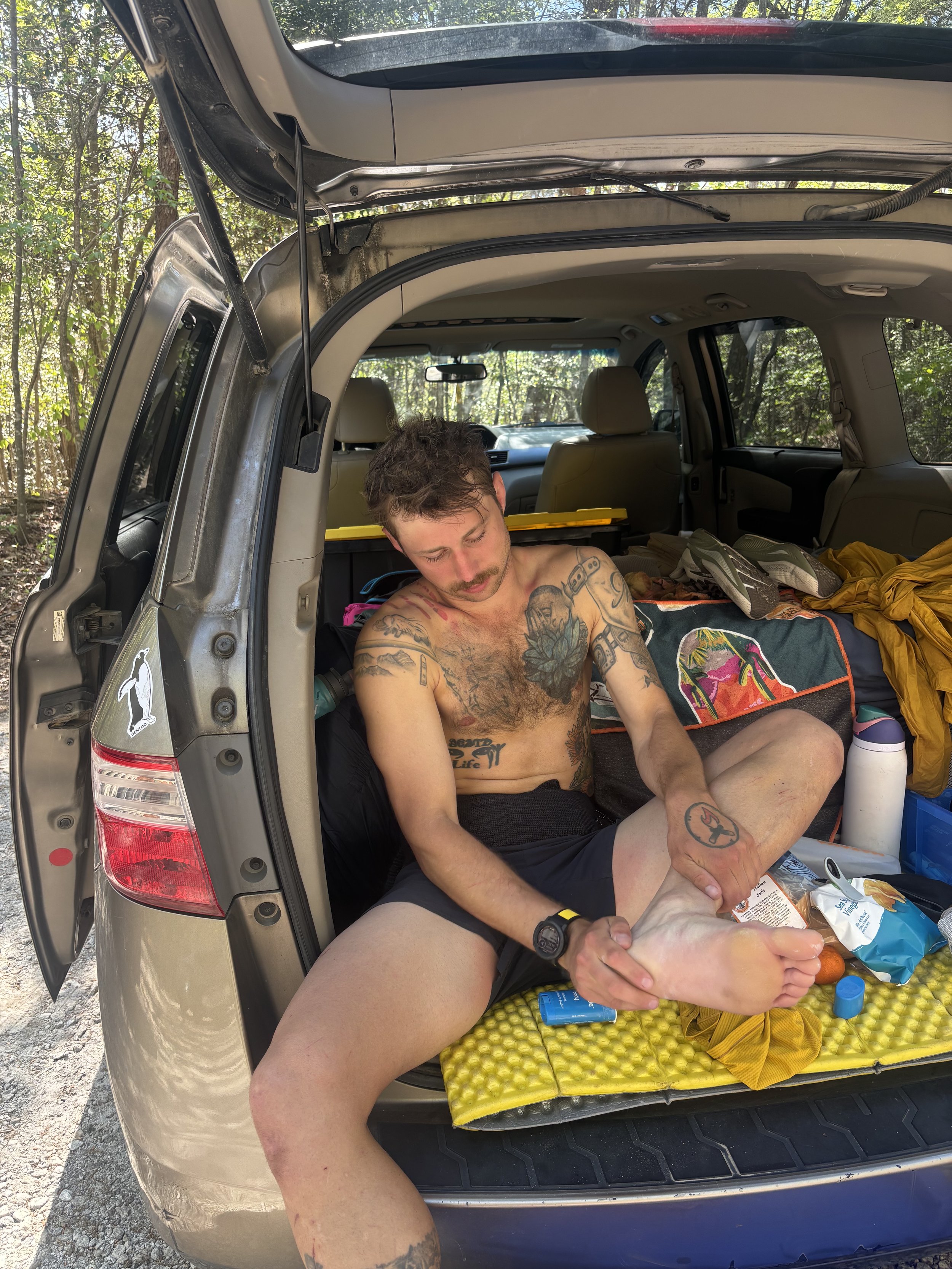
There was one thing going wrong, however. It wasn’t my feet. Actually, I was pretty grateful for how my feet looked. I had some tendon pain in my right foot, but not a single cut, blister, or hotspot had appeared while over 160 miles in. It wasn’t my musculature. I had felt surprisingly strong given the amount of output. I was burning about 6,500 calories a day (at a minimum),and though I wasn’t totally replacing those, I had eaten enough to keep the collapsing, weak-mindedness, and continuing working toll at bay. Something here may have went wrong though.
This is just speculation from the man who lives inside my body and has been attempting to push it to do ridiculously hard things for about a decade now – and it has to do with salt.
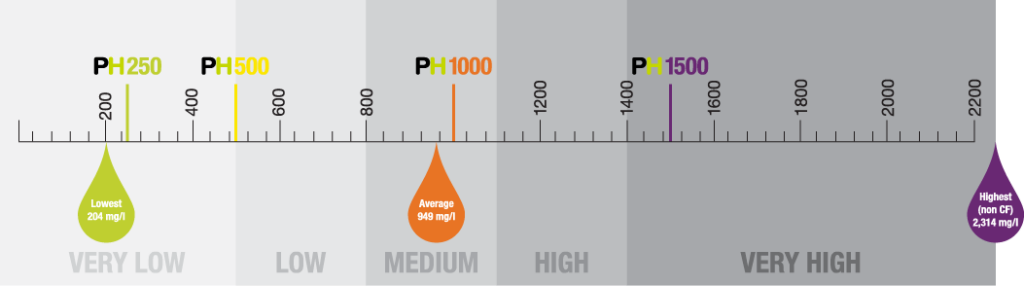
I opt into a few laboratory tests each year, usually a blood panel, but last year I also got my sweat tested for salt concentration. The data says I am at about 1,230MG of salt per litre of sweat, which is on the higher end for sure. It is almost in the “Very High” category, but a litre of sweat is quite a bit of sweat to be sure. As long as the stuff isn’t leaking out our pores constantly, it should take quite some time to reach a volume like that. The caveat; I am apt to a fairly high sweat volume as well, meaning I reach that kind of loss both in concentration and in volume faster than some of my peers. It’s not necessarily a setback of any variety. Really, it’s just a part of how my body operates that would serve me well to maintain some awareness around.
Pains
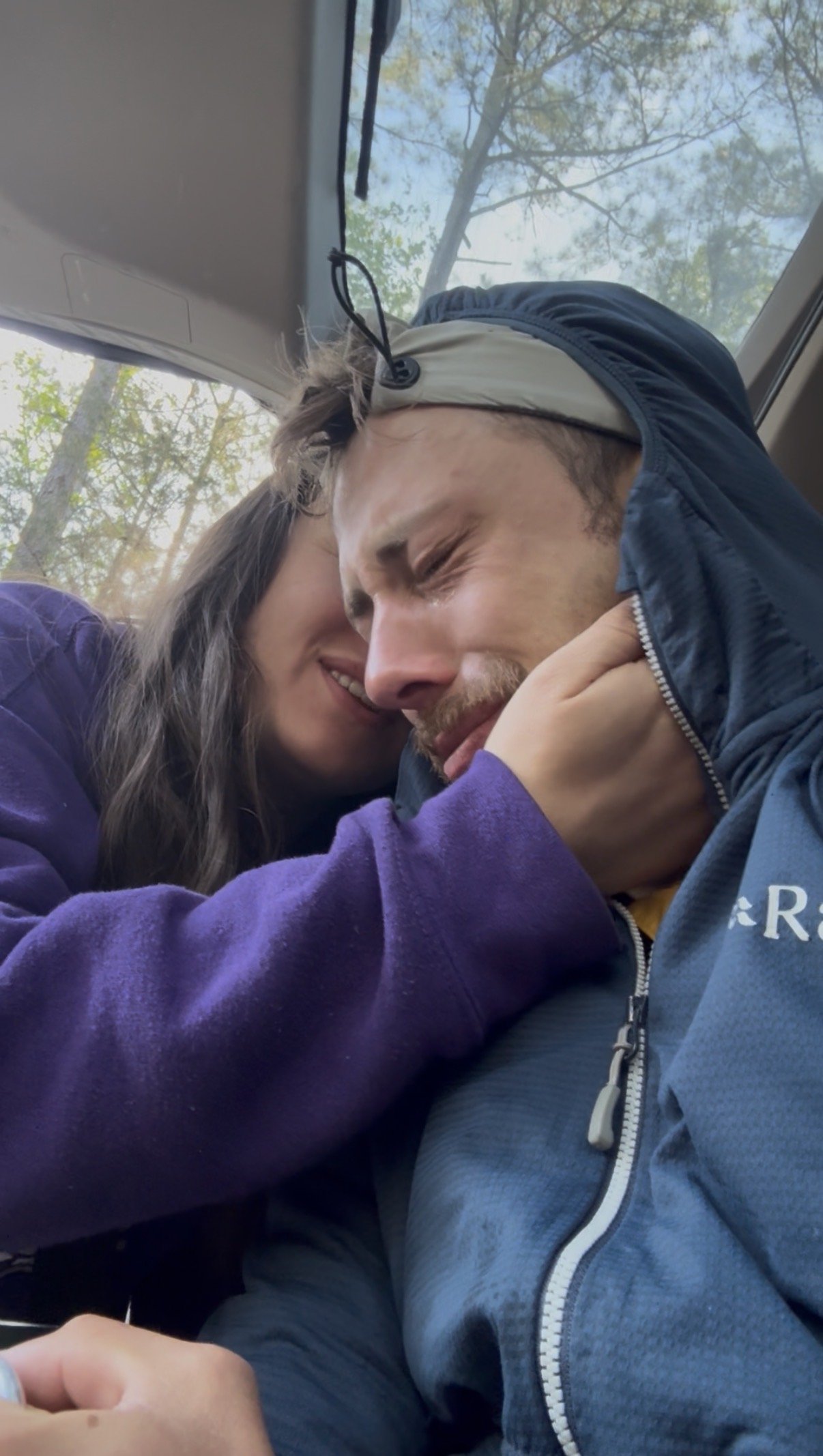
Around midday on day three I began experiencing some chest pains that were concentrated around my heart. I chalked this up to one of many discomforts that comes from ultrarunning and moved on, even when it awoke me in my sleep later that night. The pain persisted throughout the entirety of day four, was it just exhaustion from the extended labors? Could it be a kind of shock from circulating tired, dead blood from my feet into my chest? Likely, as well as I have a guess for, I was overdosing my salt intake. “There is never too much for a guy like me” is what I usually say when it comes to intake. I have finished efforts underfueled and dehydrated before, and that death march is something endurance athletes know they will one day return to but fight like hell to stave off.
The mornings were cold at around 40 degrees F, and though the South Carolina sun can be punishing, I wasn’t standing in direct confrontation of it except for about eight of my twelve hours of work per day. I was fueling those other four hours as if they were exactly the same, and that meant LMNT packets in my bottles, lots of sodium from sodas and snacks, and arguably too much tailwind (over two servings per hour for most hours of my day) despite virtually not sweating for a third of my day.
Now, if it were possible to speak to a heart specialist or other sports scientist, I could gain some clarity on the matter, but not with the costs of American Healthcare. I’ll have to keep reading and experimenting on my own, but I think thirty-or-so hours is long enough to go before deciding to call things off.
What Does it Mean?
After four days and 215 miles of running, I called my journey to an end, and I am unbothered by that choice. My crew chief and I debated the decision at length. It just felt responsible, and maybe that caution is the difference between me being a pretty great athlete and a champion-level one. I’m not certain yet, but I am glad to have spent the last two days sleeping, taking walks to keep my legs alive, and relishing in the kind of effort I never imagined was within reach for me when my running journey began.
An hour after this effort came to a close I received an email stating I was chosen as an alternate athlete to represent the United States as a Skyrunner, and so as I begin navigating what that opportunity entails, I’ll be looking forward to getting back to my love of all things steep and technical.
Much Love to Y’all